

The Quiet Influence of Daily Life
Our skin quality reflects the choices we make every day. The rest we take, the food we eat, the moments of calm we allow ourselves—all leave subtle traces on the skin. Skincare is not just what we apply, but how we live; mindful habits, gentle routines, and small gestures of care support the skin’s natural strength and resilience. Over time, these intentional choices create a quiet harmony that shows in the texture, tone, and comfort of the skin.
The Hidden Strains on Skin
Even the most meticulous skincare routine can only go so far; what happens inside our bodies plays a significant yet subtle role in how our skin looks and feels. Factors such as hydration, sleep, hormones, diet, and product build-up all influence the skin’s resilience and radiance.
KEY INTERNAL FACTORS:
- Dehydration
- Poor sleep
- Hormonal fluctuations
- Diet & nutritition
- Makeup & product build-up
In this article, we will examine the issue of dehydration. In additional articles, we’ll address more of the internal factors that can affect our skin health.

Dehydration: Water Within and Without
Our skin is made up of cells woven together with lipids—a delicate, dynamic structure that relies on water to stay supple and functional. Water isn’t merely a bystander; it makes up a significant portion of the skin’s structure, with roughly 30% of our body’s water residing in the skin’s layers—much of it in the deeper dermis where it supports elasticity and resilience, and a smaller percentage (between 10 & 20%) in the outermost layer, the stratum corneum, where its absence is most visible.
When the skin lacks water—not oils, but actual hydration—the effects are subtle at first and then unmistakable. The dehydrated state differs from dry skin: dry skin is a type defined by a lack of natural oils and often feels rough or flaky, whereas dehydrated skin is a condition caused by insufficient water, and can affect even oily or combination skin.
“FACT Dehydrated skin and dry skin often get mixed up, but remember dehydrated skin is a condition where your skin lacks water, dry skin is a skin type where your skin lacks oils ” ** Dija Ayodele
Signs Your Skin May Be Dehydrated
A well-hydrated complexion has a natural bounce and glow. When water content dips below its ideal level, the skin may show signs such as:
- A tight, uncomfortable sensation, especially after cleansing
- A dull or lacklustre tone with less reflection of light
- More pronounced fine lines and creases, particularly around the eyes and mouth
- Sensitivity or increased reactivity
- A slightly sunken look around the eyes or cheeks
Because dehydration isn’t tied to one skin type, it can be overlooked— oily skin may still feel tight, and combination skin may be dull and flaky. In this case, the solution isn’t oil alone, but water itself.
The most gentle, effective way to address dehydration is to support the skin from within—by drinking plenty of water and choosing healthy, hydrating drinks and water-rich foods throughout the day. This creates a nourishing foundation, helping skin cells maintain their structure and function, supporting elasticity, and enhancing the skin’s natural glow.
How Skin Loses Water and How to Keep It In
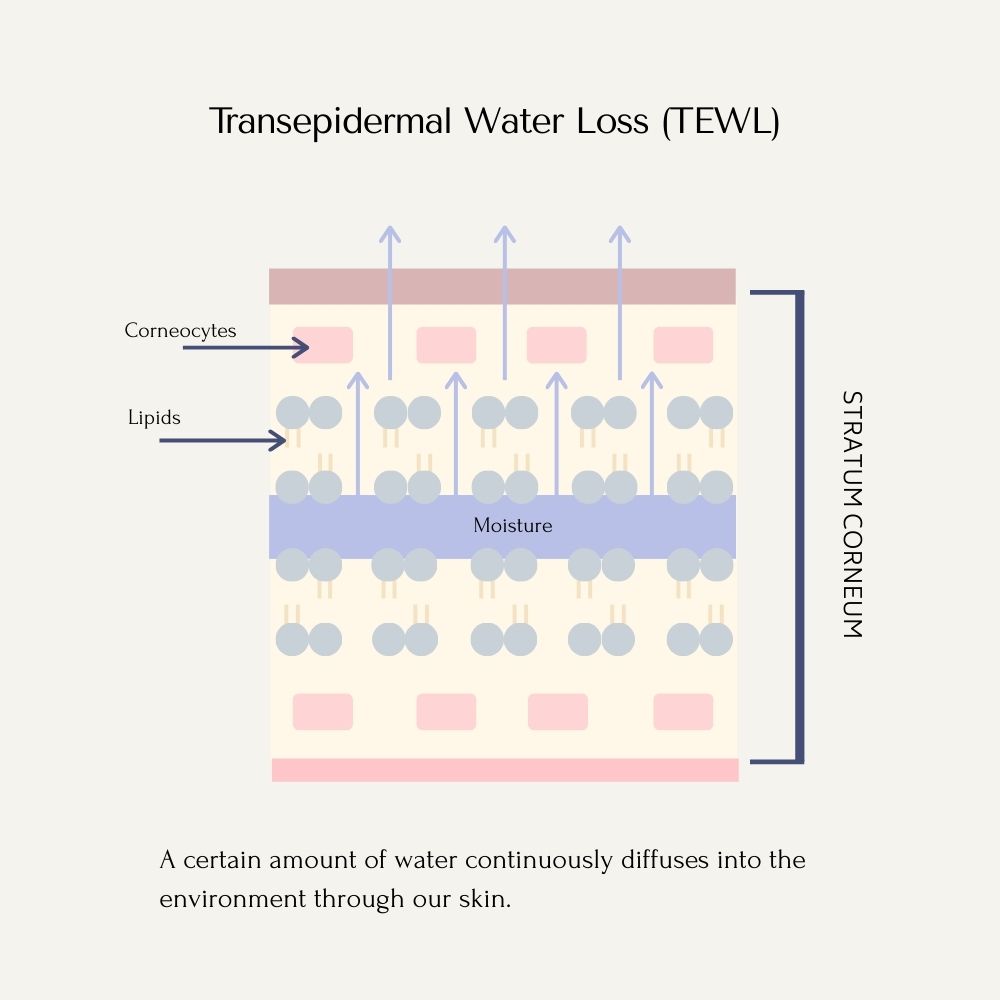
Drinking plenty of water, herbal teas and eating water-rich foods provides the foundation for well-hydrated skin, nourishing it from within. Yet even with good hydration, skin naturally loses water throughout the day—a process known as transepidermal water loss (TEWL).
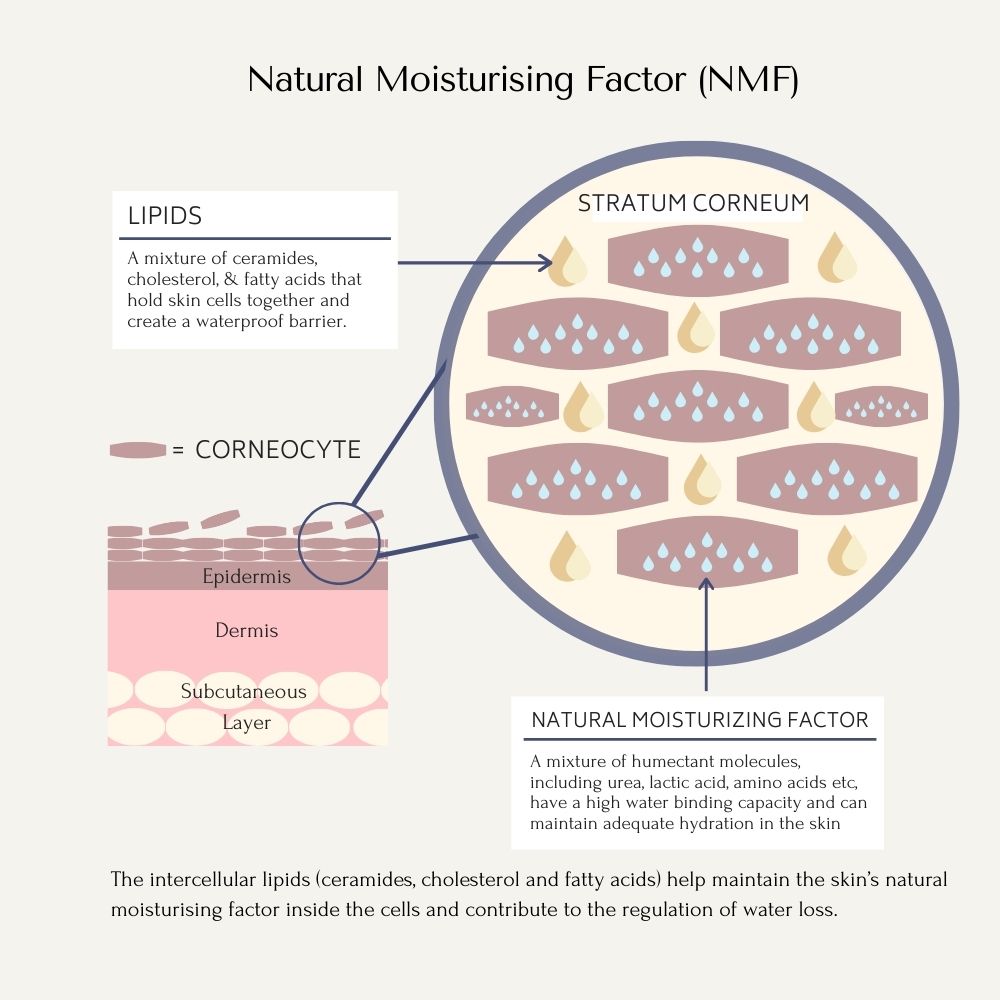
The skin’s natural moisturising factor (NMF) helps retain water, while a good occlusive cream or deeply penetrating oil can assist in keeping moisture inside the skin where it belongs.
We lose more water as we sleep than during the day, making it especially important to apply creams and oils after our evening cleansing ritual to help lock in hydration.
“Those with dry skin conditions such as eczema and psoriasis should make sure they moisturise before bed”, *** Dr Anjali Mahto
TEWL, Explained
Transepidermal water loss (TEWL) is the continuous movement of water from the deeper layers of the skin through the epidermis, where it evaporates into the surrounding air. This process occurs naturally in all skin, forming part of the skin’s ongoing renewal cycle.
The outermost layer of the skin, the stratum corneum, acts as a barrier made up of skin cells held together by lipids. When this structure is intact, it regulates water loss efficiently. When the barrier is disrupted, whether through dehydration, over-cleansing, environmental stress, or ageing, water escapes more rapidly than it can be replenished.
Over time, increased TWEL can leave skin feeling tight, dull and less resilient, even when moisture is being applied externally
NMF, Explained
Within the skin’s outer layer lies the natural moisturising factor (NMF), a collection of water-binding substances found naturally inside skin cells (corneocytes). These include amino acids and their salts, organic acids and their salts, as well as glycerol and urea, all of which work together to attract and hold water within the skin.
NMF plays a crucial role in keeping the skin soft, flexible and comfortable. When levels are healthy, skin appears smooth and balanced. When depleted, through dehydration, harsh cleansing, environmental stress or age, the skin’s ability to retain water diminishes, leading to roughness, sensitivity and a compromised barrier.
Skincare rich in skin-supportive lipids helps protect this delicate system, reinforcing the barrier and reducing excessive water loss so that hydration remains iwhitn the skin where it belongs.
Hydration for healthy skin isn't just about what you put on it - it begins from within.
Holistic skincare nurtures the skin from within, bringing lifestyle and nourishment together with thoughtful skincare rituals to support long-term skin health.
It's not about beauty, trends or quick fixes. It's about skin health.
What you put on your skin also plays a role, helping to support hydration.
Holistic skincare also considers what we apply to the skin, choosing organic and natural formulations that support the skin’s natural barrier and its ability to retain water.
To support hydration from the outside in, skincare should work with the skin rather than against it. Gentle, lipid-rich formulations help nourish and protect the barrier, allowing the skin’s natural moisturising factor to function as it should. Oils and creams made with thoughtfully chosen, organic ingredients can help soften, comfort and seal in moisture, complementing the hydration we provide through lifestyle and nourishment. This considered approach allows skincare to support the skin’s own intelligence, rather than override it.
Choosing products that reflect this philosophy allows skincare to support the skin’s natural intelligence. Explore our skincare collection, carefully formulated with nourishing botanical oils and extracts, to complement your daily hydration routine.

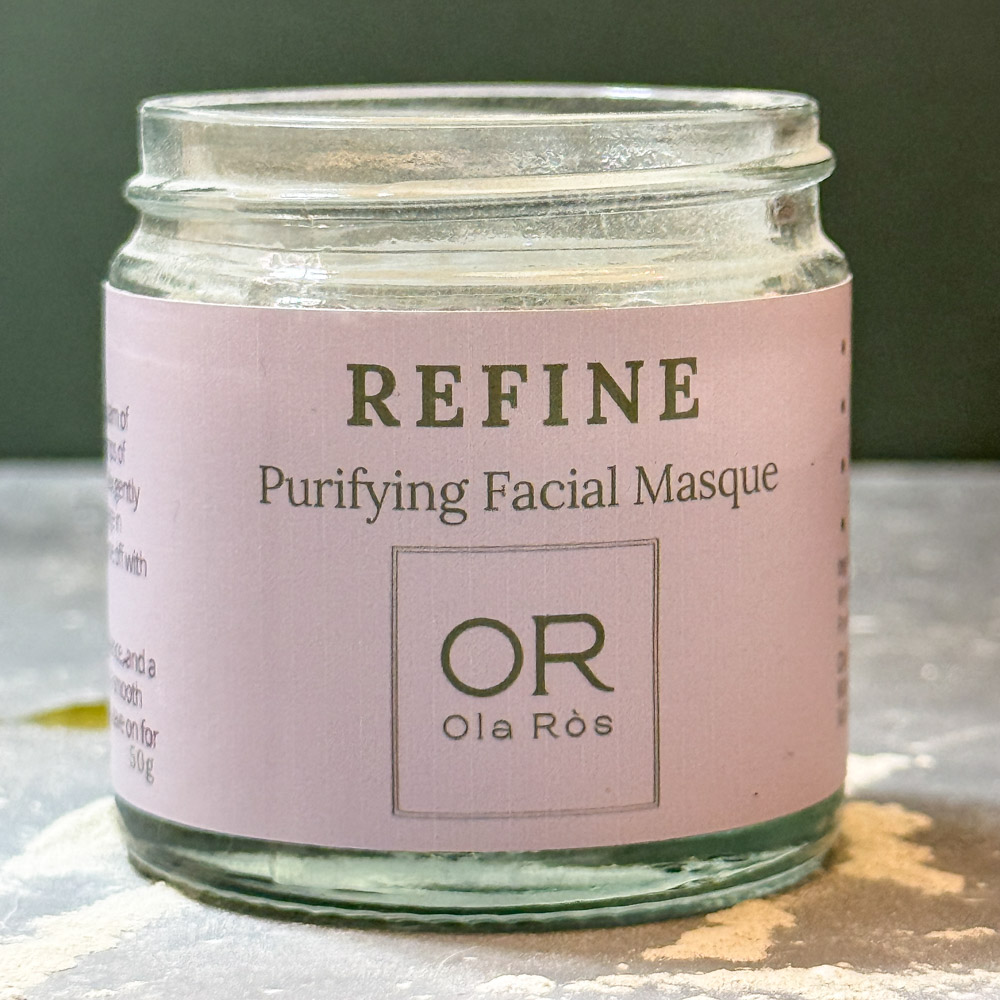


Read More Ola Ròs Articles


This journal is intended as a source of guidance and information, not instruction. Skin is individual, and listening to it remains the most important step of all.
This blog article was written by:
Christine McKay
Founder of Ola Ròs Skincare
Organic Skincare Formulator
BIBLIOGRAPHY:
*MODERN COSMETICS, INGREDIENTS OF NATURAL ORIGIN, A SCIENTIFIC VIEW, DR DAMJAN JANEŠ AND DR NINA KOECVAR GLAVAC
** BLACK SKIN THE DEFINITIVE SKINCARE GUIDE, DIJA AYODELE
***THE SKINCARE BIBLE, DR ANJALI MAHTO