

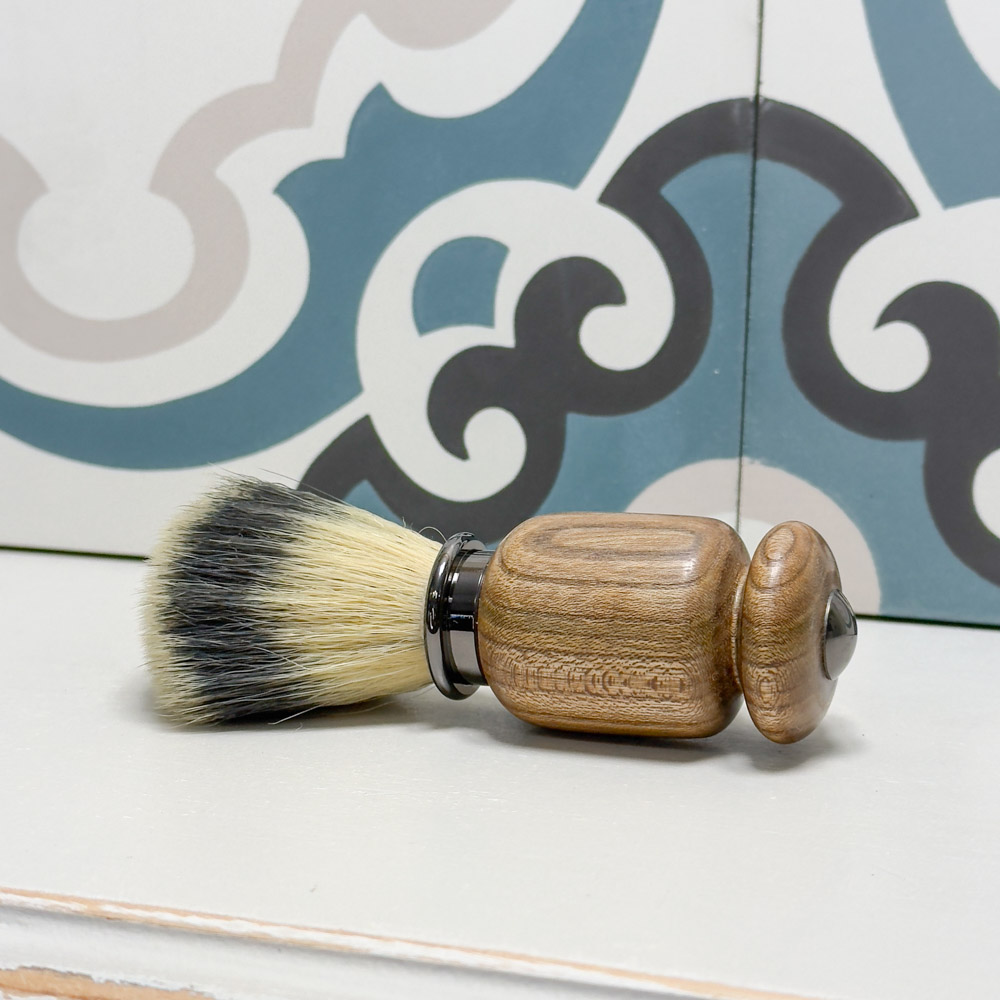
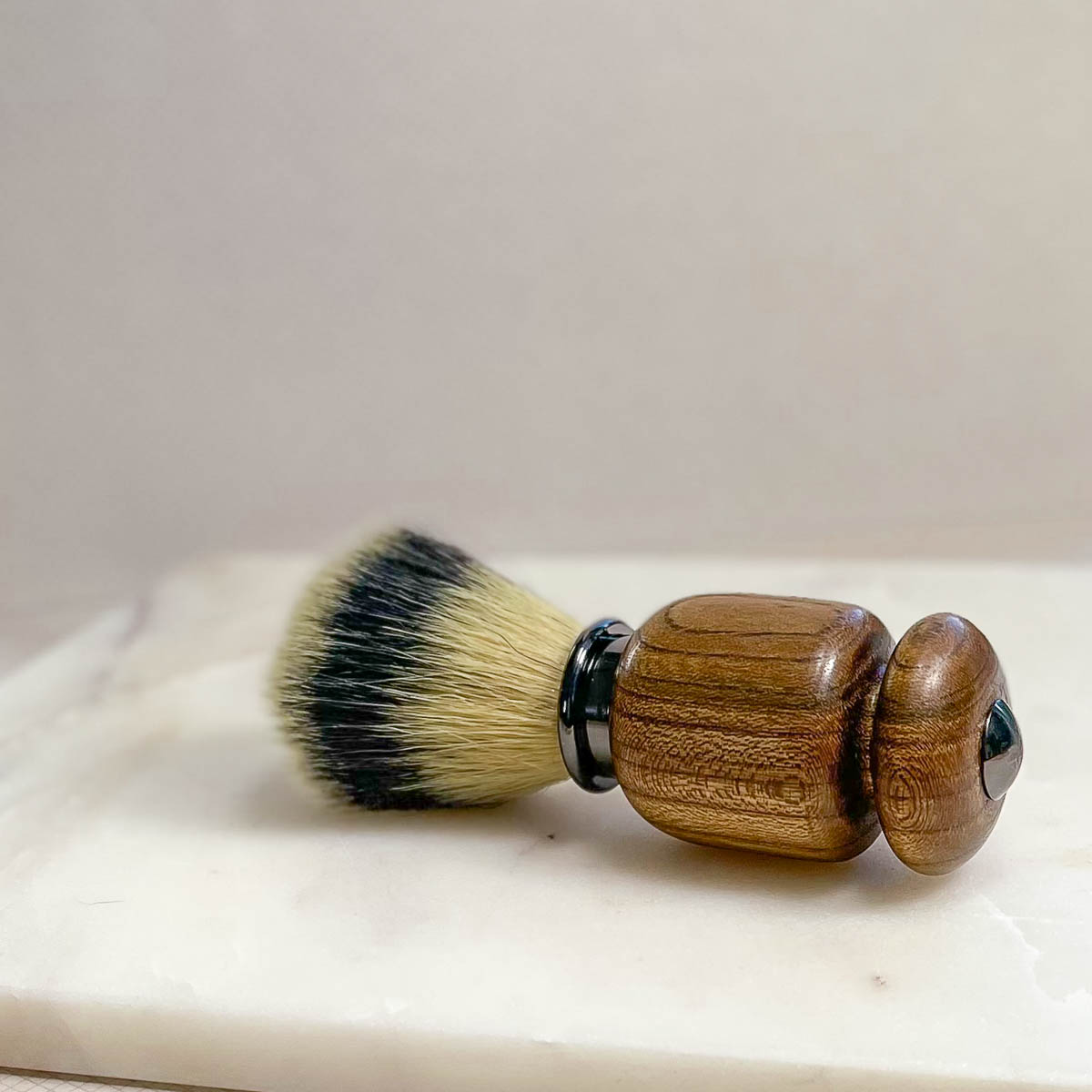
Description
From Lathe to Bathroom: the Making of a Shaving Brush.
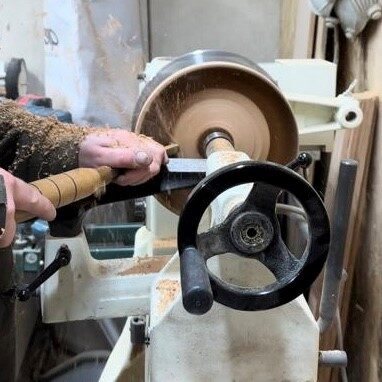
Our woodworking team starts by selecting the wood. Once chosen, the wood is mounted on the lathe and is shaped into a rough cylinder. With the lathe spinning at 2500 RPM the handle is finely shaped into the desired design and then sanded. Several coats of Odie’s oil are then applied. The synthetic knot is then inserted and the product is left for a few days to dry and cure. A last buff with a cloth gives the brushes a beautiful shine, and they are good to go.
A Guide to the Materials We Use:

Scottish Elm: A Timeless Wood
Scotland has various types of elm trees, but many have been affected by Dutch Elm disease. The Wych elm is especially beautiful and long-lived. Recently, an 800-year-old elm tree located in Beauly collapsed. Elm is still highly valued for its appearance, and we use locally sourced elm for woodturning to reduce our carbon footprint. Learn more about elm at the woodland trust.
Caring for your Traditional Shaving Brush:
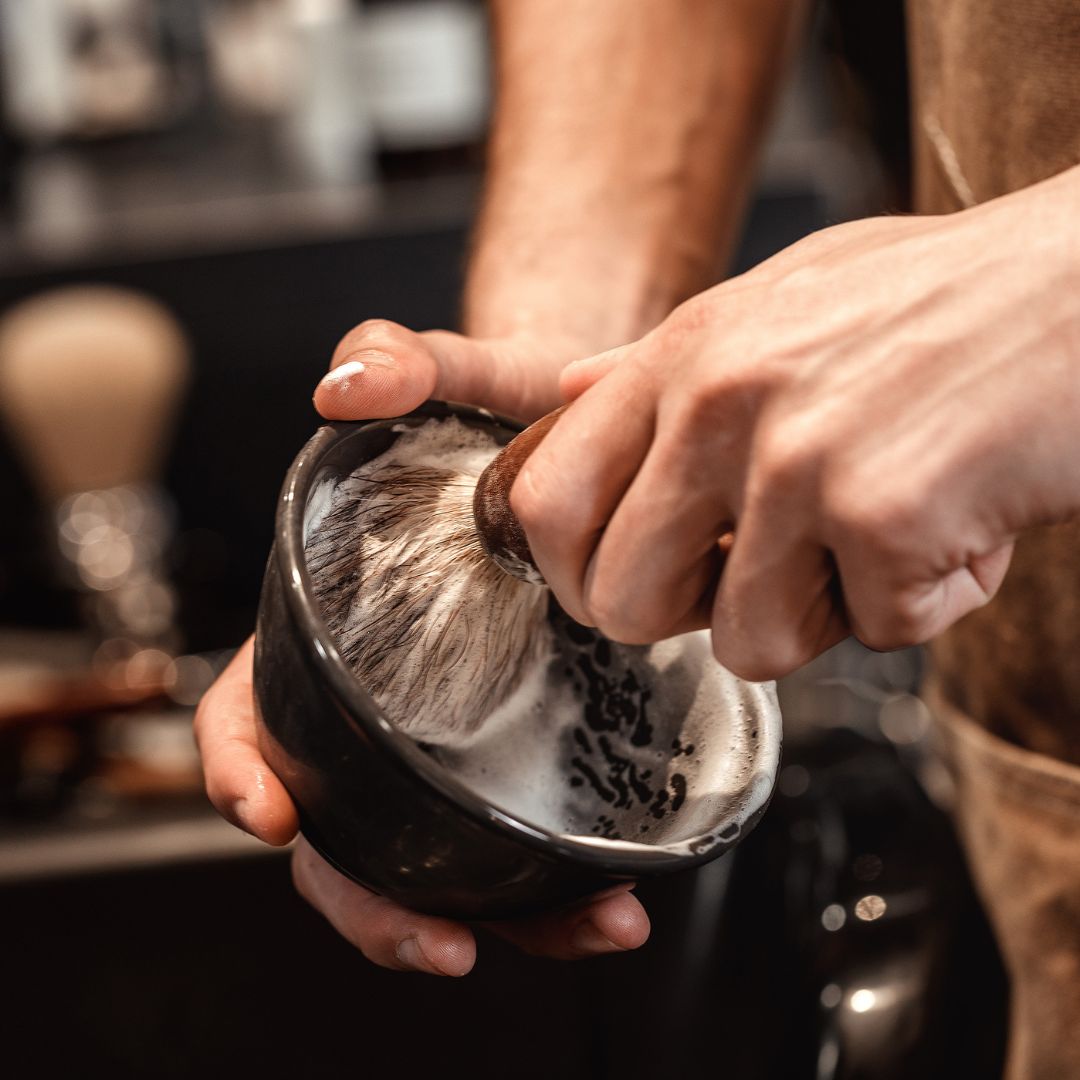
To maintain the longevity and good performance of your shaving brush, follow these instructions: Rinse thoroughly after each use with warm water to remove residual soap and gently squeeze out excess water, taking care not to twist or pull the bristles. To ensure proper drying and prevent mould, store the brush upright in a well-ventilated area, or use a brush stand. Periodically, clean the brush bristles with a mild shampoo or brush cleaner. Finally, oil the handle monthly with appropriate wood oil to keep the wood from drying out.
Suppliers:
We use Odie’s oil as our finishing oil. To find out more about the qualities of this amazing oil click here.




Reviews
There are no reviews yet.
Only logged in customers who have purchased this product may leave a review.